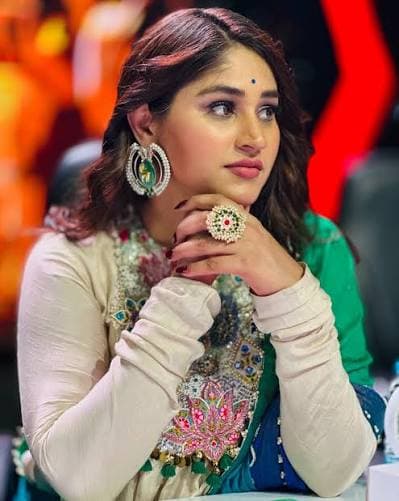
A live music setting inspired by the poetry, ghazal, and contemporary performance spirit of ‘Jazbaat’.
Some live music events are built around spectacle. Others are built around listening. ‘Jazbaat – A Soulful Celebration of Poetry and Ghazals’ was conceived for the second kind of evening: a programme where words, melody, memory, and silence could share the same stage.
The event, announced for 29 August 2026 in Kanpur, brought acclaimed vocalist Pratibha Singh Baghel to the city for her first performance there. It was organised by World of Musicians in association with Help U Educational and Charitable Trust. More than a conventional concert listing, the announcement presented ‘Jazbaat’ as an immersive cultural experience built around ghazals, contemporary Hindi poetry, and emotionally attentive live performance.
A concert designed around poetry The defining idea behind ‘Jazbaat’ was its dialogue between poetry and music. The programme featured Baghel alongside contemporary poets Manika Dubey and Swayam Srivastava, whose work gave the evening a literary dimension beyond a standard singer-led set. BookMyShow described the programme as a meeting point between the timeless beauty of ghazals and the emotional force of contemporary Hindi poetry.
That combination is important. A ghazal is not simply a song with a familiar melody. Its power depends on the relationship between text, interpretation, phrasing, and emotional restraint. The singer has to make the words intelligible without reducing them to explanation. The audience, in turn, has to listen not only for the tune but for the layers of meaning inside the verse.
By placing poets and a vocalist within the same cultural frame, ‘Jazbaat’ recognised that poetry in performance is not an accessory to music. It is part of the experience itself. Each sher can open a different emotional door—love, longing, separation, remembrance, dignity, or hope—while the musical arrangement gives those words time to breathe.
Why Pratibha Singh Baghel was the right voice Baghel’s artistic identity is especially suited to a programme of this kind. Her work spans ghazal, Sufi, semi-classical, Hindustani classical, and Bollywood music. In an interview with 15 Questions, she described music as both a form of communication and a way to express emotions that ordinary conversation cannot always carry. She also spoke about the importance of preserving authenticity while allowing traditional music to meet new influences.
That balance gives her performances a contemporary reach without requiring the music to abandon its roots. Her stated influences include Mehdi Hassan, Ghulam Ali, and Lata Mangeshkar. She has also worked across collaborative formats, including projects involving Gulzar, Ustad Zakir Hussain, orchestral musicians, and contemporary producers.
For younger listeners, this matters. Traditional forms often survive not by remaining sealed in the past, but by finding performers who can interpret them with conviction in the present. Baghel’s repertoire and collaborations show how ghazal and semi-classical music can remain emotionally direct, musically refined, and open to new audiences.
Kanpur as more than a venue Bringing ‘Jazbaat’ to Kanpur was also a meaningful cultural choice. The city is widely associated with education, industry, literature, theatre, and a strong appetite for public cultural life. A dedicated ghazal and poetry evening gives audiences an alternative to the increasingly dominant format of high-volume, spectacle-led entertainment.
The event’s value therefore lies not only in the artist on stage. It lies in the kind of attention the programme invites. A ghazal concert asks the audience to slow down. It rewards listening over distraction. It creates a shared room in which a line of poetry can become personal to hundreds of people at once.
This is one reason live music remains essential. A recording can preserve a voice, but a live performance creates a temporary community around that voice. The same verse can feel different when heard in a hall, surrounded by strangers who respond at the same moment. The experience is collective, yet deeply individual.
The role of World of Musicians For World of Musicians, ‘Jazbaat’ reflects a broader approach to artist booking and event curation. The organisation describes its work as connecting audiences and event planners with musicians and entertainers for paid events, including concerts, corporate programmes, weddings, and private celebrations. It also emphasises tailored entertainment solutions rather than a one-format-fits-all booking model.
That distinction is visible in this programme. ‘Jazbaat’ was not designed as generic event entertainment. Its identity came from the combination of artist, repertoire, poetry, city, and audience. The format required an understanding of the emotional architecture of the evening: when the music should lead, when poetry should take space, and how the two should deepen one another.
This is what meaningful event curation can achieve. It can move beyond simply filling a stage and instead create a clear artistic proposition. For audiences, that makes the event easier to understand before they arrive and more memorable after they leave.
Music with a social dimension The partnership with Help U Educational and Charitable Trust adds another layer to the programme. Help U has previously used musical events to support public-awareness initiatives, including blood-donation campaigns. On its own website, the trust describes a concert featuring Pratibha Singh Baghel in which the singer appealed to audiences to donate blood and later agreed to become the brand ambassador for its blood-donor campaign. The organisation also documents musical programmes connected with river conservation, national integration, and awareness around violence against women.
That history shows how music can operate in public life without losing its artistic value. A concert can offer beauty and reflection while also creating space for a message that matters. The strongest collaborations do not force a social cause into the performance. They allow the cause to grow naturally from the trust between artist, organiser, and audience.
Why ‘Jazbaat’ is relevant beyond one evening The importance of this programme extends beyond its date or venue. It points to a larger question for India’s live music ecosystem: how can organisers create more room for listening-based experiences?
There is clearly a place for large-format concerts, dance floors, celebrity acts, and high-energy festivals. But there is also a growing need for programmes that value poetry, acoustic detail, cultural memory, and emotional nuance. These events can attract experienced listeners while also giving younger audiences an accessible entry point into ghazal and semi-classical traditions.
‘Jazbaat’ offered that possibility through a simple but powerful structure: a respected voice, strong poetry, a live audience, and a production built around feeling rather than excess. It showed how an artist booking agency can become a cultural curator, how a charitable trust can use music as a bridge to public engagement, and how a city can become part of an artist’s continuing journey.
The lasting idea behind ‘Jazbaat’ is that music does not always need to shout to be powerful. Sometimes a carefully sung line, a pause between verses, and a room willing to listen are enough to create an unforgettable evening.
More from Blog
 Blog
Make Your Wedding Sparkle: Seamless Booking for Elite Musicians and Entertainers with World of Musicians
Your wedding day is one of the most special occasions in your life, and it deserves to be nothing short of extraordinary. To create a memorable celebration…
 Blog
Make Your Corporate Event Shine with World of Musicians
When it comes to organizing a corporate event that leaves a lasting impression, the right entertainment can make all the difference. At World of Musicians, we…